
Skip to content
Kitfix MarineMarine Engineering志在遊艇工程
FNM

Marine propulsion

FNM Marine Engines and Hybrid Drives

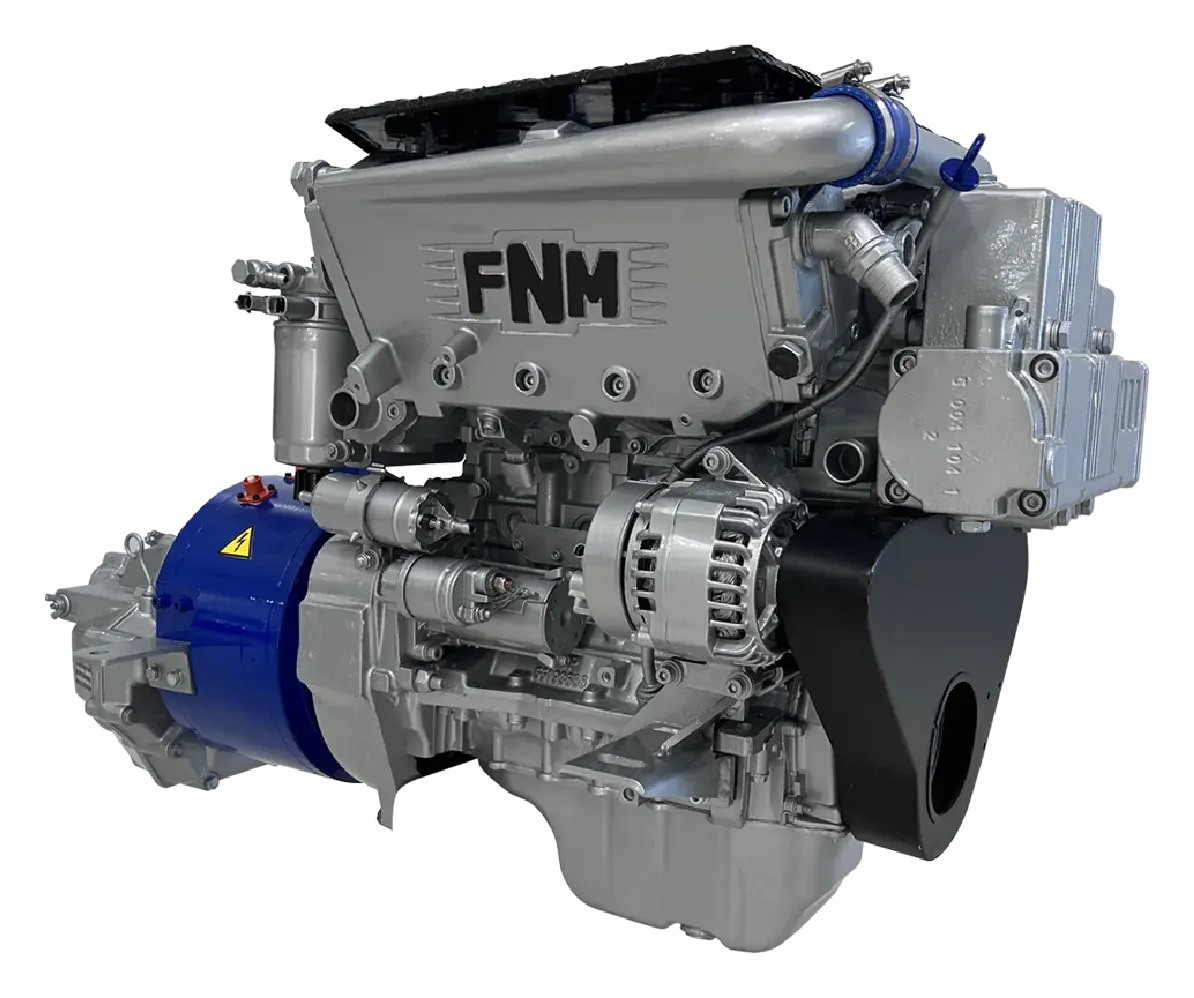
FNM combines marine diesel propulsion with the option of an electric drive in its Blue Hybrid System (BHS). The arrangement can be relevant to owners weighing conventional cruising, low-noise electric manoeuvring or a refit that changes how the vessel is used.

FNM marine propulsion engine

EQUIPMENT SYSTEMS

Systems and product families

FNM’s BHS joins an internal-combustion engine and an electric machine within one propulsion system. BHS offers thermal, electric and hybrid operating modes; the practical role of each depends on the exact engine, drive components, batteries and vessel integration. This makes BHS different from a simple engine replacement: the propeller shaft or transmission, energy storage, charging strategy, cooling, controls and operator procedures are part of the system. FNM also offers conventional marine engines, so identifying whether a vessel has a standard engine or a BHS installation is the first step in discussing maintenance or parts. Specifications and component compatibility should be checked against the matching manufacturer documentation.

01Blue Hybrid System

BHS integrates a diesel engine and electric drive. Thermal mode uses the combustion engine, electric mode uses stored electrical energy, and hybrid mode combines the sources. The balance and transitions are system-specific, so the vessel’s operating pattern and equipment configuration should guide planning.

02Marine propulsion engines

FNM’s conventional inboard engines are installed with a compatible gearbox or other specified transmission and matched to the vessel’s propeller and hull. A replacement assessment should consider the complete propulsion train, engine mounts, shaft alignment, exhaust and cooling connections.

03Controls and energy storage

Hybrid controls coordinate the engine, electric machine and battery system. Display alarms, charging equipment, cabling and software are part of the diagnosis; an engine-only inspection may miss a fault in the connected drive or energy system.

PRODUCT INFORMATION

Understanding the configuration

  1. 01

    Identify the full system

    Share the engine and BHS model codes, serial plates, gearbox or drive details, battery type and control-panel photographs. Note any recent changes to batteries, charging equipment or vessel wiring.

  2. 02

    Describe how the boat is used

    Record typical cruising, harbour manoeuvring, charging opportunities, operating hours and the issue’s operating mode. This helps separate an engine concern from an electric-drive or energy-storage concern.

  3. 03

    Plan installation as a system

    Before a new installation or repower, map engine-room access, mounting, shaft line, exhaust, cooling, battery placement, ventilation and cable routes together. Confirm the exact kit and interface requirements for the chosen configuration.

DOWNLOADS

Technical documents

Check that the document matches your equipment model and revision.

  • 20 HPE BHS · 96 Vdc

    Blue Hybrid System technical data

    Open PDF
  • 42 HPE BHS · 96 Vdc

    Blue Hybrid System technical data

    Open PDF
  • 30 HPE BHS · 96 Vdc

    Blue Hybrid System technical data

    Open PDF

COMMON QUESTIONS

Questions about this equipment

What does the FNM Blue Hybrid System combine?

It combines a marine diesel engine and an electric machine, with thermal, electric and hybrid operating modes described by FNM. The available functions and operating limits depend on the installed version and its associated batteries and controls.

How can I identify an FNM hybrid configuration?

Check the engine and BHS model codes, serial plates, transmission, battery and charging-system information against the matching manufacturer documentation. Configurations and specifications vary by model.

MORE IN THIS CATEGORY

TALK TO KITFIX

Discuss this equipment with Kitfix

Share your vessel and equipment details, and tell us what you would like to discuss.

Enquire about FNM